


The fountain of Ahmed III was built in 1728 in front of the Imperial Gate of Topkapı Palace, and it marks a change in Ottoman taste. Instead of the plain stone of earlier fountains, it has wide eaves, painted decoration and verse carved across every face.
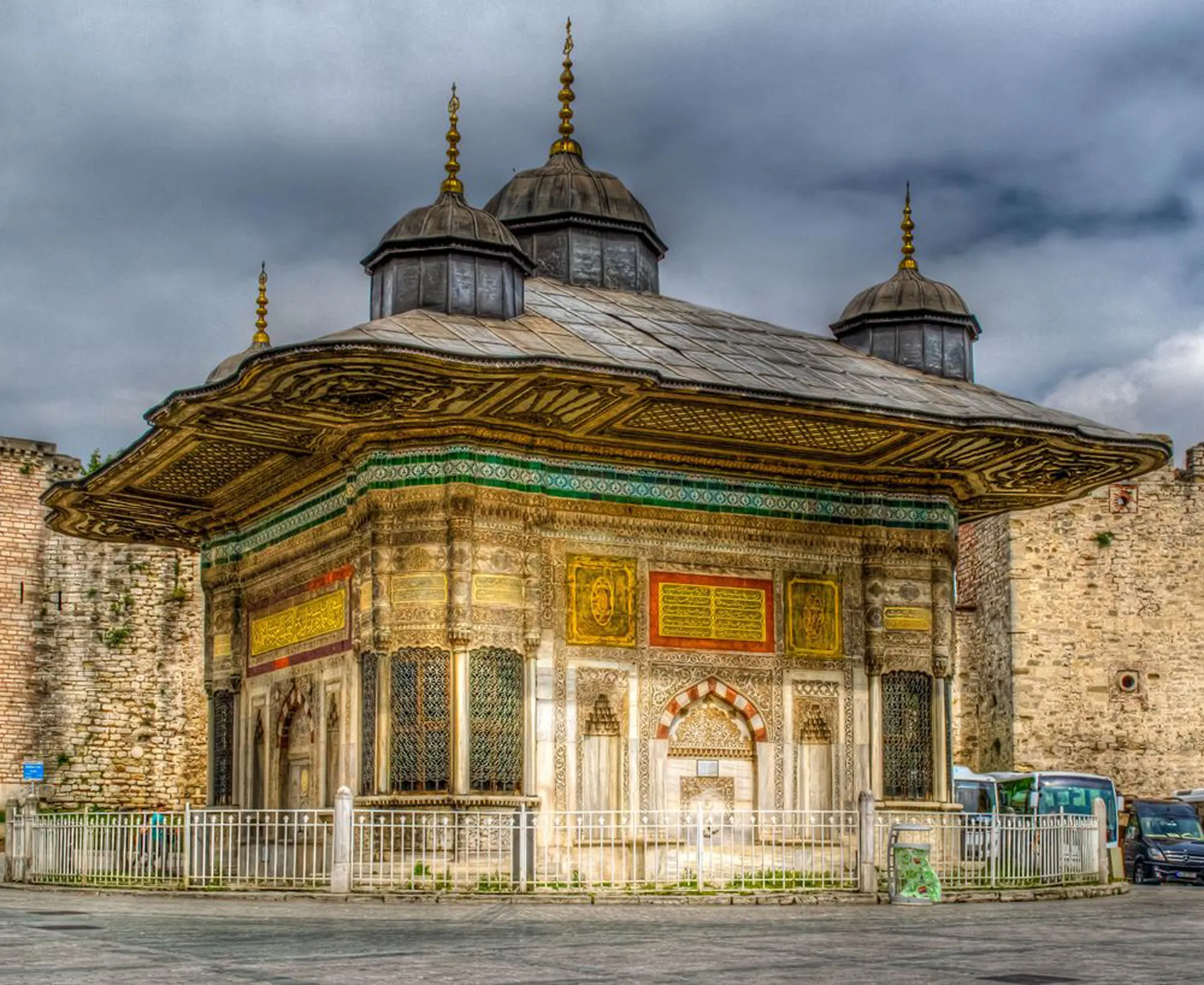
The period it belongs to is called the Tulip Era, a short stretch of the early eighteenth century when the court looked outward, imported European forms and spent heavily on gardens and pleasure. The fountain is the most photographed thing left from it.
It stands in the open, so it can be seen at any hour and costs nothing. There are five sebil windows where water was once handed out to passers-by.
Nine or ten minutes on foot from the Sultanahmet tram stop, on the way to Topkapı.
Category:
History