

Restored early 1900s facades between Faik Paşa Street and Pera are defined by hand-forged wrought-iron balcony grilles, carved limestone cornices, soaring three-meter ceilings, projecting wooden bay windows (cumba), and decorative Art Nouveau transom windows. These structural features reflect the cosmopolitan architectural shift of late Ottoman Istanbul, combining European ornamental trends with traditional local building techniques.
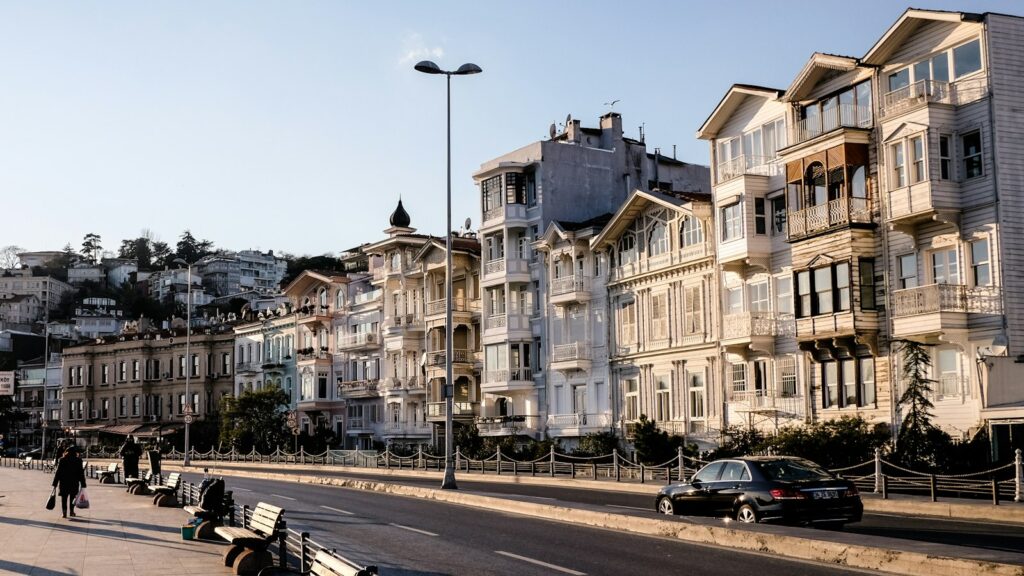
Ornamental ironwork and high ceilings of Faik Paşa Street
Faik Paşa Street features signature early twentieth-century design elements, including wrought-iron balcony railings, hand-forged window grilles, and structural ceilings rising between three and three-and-a-half meters above floorboards. Built primarily between 1890 and 1915, the multi-story masonry residential blocks along this street were designed by Greek, Armenian, and Levantine master builders who shaped the urban residential character of the Kuloğlu quarter. The facades on Faik Paşa Street rely heavily on natural light, utilizing floor-to-ceiling double-hung timber windows paired with slim decorative iron railings that allow light to penetrate deep into long, narrow floor plans.
Walking down Faik Paşa Street toward the neighboring Çukurcuma district, you will notice how these early 1900s structures maintain a strict verticality. Facades are constructed from heavy brick masonry coated in mineral plaster, punctuated by repetitive window rhythms and arched main entrance portals. Heavy wooden entry doors are frequently crowned with semicircular glass transoms framed in decorative cast iron work, which served both as a source of hallway illumination and as a status indicator for the building’s original residents.
Inside these historic structures, architectural preservation focuses on retaining spatial volume and timber craft. At The Soul Hotel, which occupies a meticulously restored building on Faik Paşa Street, interior spaces retain these classic proportional dimensions while updating structural support systems. Guests staying in an Antique Room with Sofa can observe preserved ceiling moldings and traditional tall window frames that reflect the precise domestic scale of late-era Ottoman residential architecture.
Neoclassical facades along Meşrutiyet Avenue within a ten-minute walk
Meşrutiyet Avenue presents late nineteenth and early twentieth-century Neoclassical architecture through symmetrical limestone facades, decorative stone cornices, ionic pilasters, and arched window pediments located an eight to ten-minute walk from Kuloğlu. Running parallel to İstiklal Avenue, this grand corridor became the premier diplomatic and hospitality boulevard of Pera during the late Ottoman period, attracting international architects who introduced grand European facade compositions to the city skyline.
The structural layout of buildings along Meşrutiyet Avenue differs significantly from the narrow domestic scale of Faik Paşa Street. Here, commercial and hotel structures feature heavy ashlar masonry bases with deep horizontal rustication, topped by upper floors with sculpted window surrounds and ornate pediment crowns. Triangular and segmental window pediments alternative rhythmically across five to six stories, while rooflines are terminated by prominent stone cornices fitted with decorative dentils and brackets.
If you take an afternoon stroll from Kuloğlu toward Meşrutiyet Avenue, you will cross several narrow side streets that highlight the transition between quiet neighborhood dwellings and monumental public architecture. To gain deeper insight into how these historic urban quarters developed over decades, you can read more about historic Beyoğlu street stories during your architectural walk through the area. Architectural highlights along Meşrutiyet Avenue include the Pera Palace Hotel and the Grand Hotel de Londres, both demonstrating how Neoclassical grandeur adapted to narrow urban street alignments.
Ottoman Revivalist details inside restored Kuloğlu residential suites
Restored early 1900s suites in Kuloğlu combine Ottoman Revivalist motifs such as projecting bay windows (cumba), carved geometric ceiling bosses, molded plaster cornices, and patterned marble floor tiles inside historic living spaces. The First National Architectural Movement in Turkey, which gained momentum in the 1910s, sought to synthesize European structural engineering with classical Ottoman decorative forms, resulting in distinct residential features across Beyoğlu’s quarters.
One of the most identifiable elements of this style is the wooden or stone bay window (cumba) cantilevered over the street level. Supported by carved stone corbels or forged iron brackets, the cumba expanded internal living space while providing occupants with multi-directional views down narrow neighborhood lanes. Inside restored suites, these bay windows create natural reading nooks filled with direct sunlight throughout the morning hours.
Modern restoration work within Kuloğlu respects these structural details while integrating discreet contemporary comforts such as silent climate control systems and high-speed Wi-Fi. The Soul Hotel team highlights that preserving original wall plaster, high interior timber doors, and structural ceiling heights helps regulate ambient room temperatures naturally throughout changing seasons. In categories such as the Deluxe Room with Galata View, classic window framing directly captures views of Galata Tower, situated a ten to fifteen-minute walk downhill. Guests exploring the quarter often inquire whether the property is near major city landmarks, and the central location allows easy foot access to both historical architecture and contemporary cultural sites.
| Location / Street | Dominant Architectural Style | Key Structural & Decorative Features | Distance from Hotel |
|---|---|---|---|
| Faik Paşa Street | Late Ottoman Domestic / Art Nouveau | Wrought-iron balcony grilles, 3m+ ceilings, tall double-hung windows | 0-minute walk (Location site) |
| Meşrutiyet Avenue | Neoclassical & Eclectic | Rusticated stone bases, pedimented windows, grand pilasters | 8 to 10-minute walk |
| Çukurcuma Quarter | Ottoman Vernacular & Masonry | Projecting wooden cumba bay windows, carved entrance transoms | 2 to 5-minute walk |
| İstiklal Avenue | Art Nouveau, Neoclassical & Neo-Gothic | Monolithic stone facades, ornate balconies, passaged arcades | Under 5-minute walk |
Connecting Beyoğlu building history with Ottoman heritage stays at Hotel Sultania
Comparing Beyoğlu’s early twentieth-century residential quarters with the historic peninsula’s imperial architecture highlights how European influence and Ottoman tradition merged across Istanbul’s distinct districts. While Beyoğlu developed as a modern, cosmopolitan center featuring European-inspired residential blocks and Art Nouveau detailing, the Historic Peninsula across the Golden Horn retained its classical imperial character centered around monumental mosques, palaces, and traditional wooden mansions.
Travelers interested in tracing the evolution of Turkish architecture can contrast the late Ottoman apartment living of Kuloğlu with classical imperial design elements by visiting Sultanahmet. For an immersive experience in traditional design across the Golden Horn, you can pair your stay in Beyoğlu with a stay at Hotel Sultania, where room interiors pay tribute to Ottoman royal heritage with handcrafted woodwork, gilded details, and traditional Turkish bath facilities.
A complete cultural exploration of Istanbul’s historic quarters should also include traditional culinary heritage. When crossing the Golden Horn to explore Sultanahmet or Sirkeci, you can dine at Olive Anatolian Restaurant, which offers classic Anatolian recipes alongside clearly labeled vegan and vegetarian choices. Experiencing both Beyoğlu’s early twentieth-century urban architecture and Sultanahmet’s historical dining and lodging provides a balanced, comprehensive perspective on Istanbul’s layered built environment.
Exploring the historic streets between Faik Paşa, Çukurcuma, and Meşrutiyet Avenue on foot offers design enthusiasts a direct look into Istanbul’s early twentieth-century architectural transformations. By choosing a restored boutique base in Kuloğlu, you can experience the craft, high ceilings, and detailed masonry of Pera’s golden era while remaining within walking distance of the city’s finest cultural landmarks.
Frequently Asked Questions
Which structural details define early 1900s restored facades between Faik Paşa Street and Pera?
Early 1900s restored facades between Faik Paşa Street and Pera are defined by hand-forged wrought-iron balcony grilles, carved stone cornices, three-meter interior ceilings, and projecting wooden bay windows (cumba). These features reflect the blending of European Art Nouveau and Neoclassical styles with traditional Ottoman craftsmanship.
How far is The Soul Hotel on Faik Paşa Street from İstiklal Avenue?
The Soul Hotel is located on Faik Paşa Street in the Kuloğlu quarter, less than a five-minute walk from İstiklal Avenue. This convenient central positioning allows visitors to explore Pera's historic pedestrian boulevard easily on foot.
How long does it take to walk from Faik Paşa Street to Galata Tower?
Walking from Faik Paşa Street downhill toward Galata Tower takes approximately ten to fifteen minutes. The walk passes through historic side streets lined with craft studios, vintage shops, and restored early twentieth-century apartment blocks.
Where can you see original Art Nouveau ironwork around Kuloğlu?
Original Art Nouveau wrought-iron grilles and door transoms are visible along Faik Paşa Street, Turnacıbaşı Street, and throughout the neighboring Çukurcuma antique district. Most residential building entryways erected between 1900 and 1915 retain these decorative metalwork elements.
What architectural style characterizes Meşrutiyet Avenue?
Meşrutiyet Avenue is characterized by late nineteenth and early twentieth-century Neoclassical and Eclectic architecture. Facades along this boulevard feature heavy rusticated stone bases, ionic pilasters, continuous cornices, and decorative window pediments.
Where can I find Anatolian dining with vegan options when visiting the Historic Peninsula?
When visiting the Historic Peninsula, you can dine at Olive Anatolian Restaurant in Sirkeci. The restaurant specializes in authentic regional Anatolian recipes and features dedicated vegan and vegetarian menu choices.
What are the standard check-in and check-out times at The Soul Hotel?
Standard check-in at The Soul Hotel begins from 14:00, and standard check-out is until 12:00. The multi-lingual reception team assists guests in English, Turkish, and Russian.
What is a traditional cumba window in Beyoğlu architecture?
A cumba is a cantilevered wooden or stone bay window projecting from the upper floor facades of traditional Ottoman buildings. In early twentieth-century Beyoğlu apartments, cumbas extended interior living spaces and maximized daylight entry along narrow street lanes.
Photo: Alev Takil — Unsplash
